Securing a reliable pest control service in Baltimore requires an immediate, scientifically grounded approach to halt structural destruction and eliminate persistent indoor colonies. Property owners across Baltimore City face intense biological pressures ranging from subterranean termites compromising historic framing to Norway rats penetrating aging rowhouse foundations.
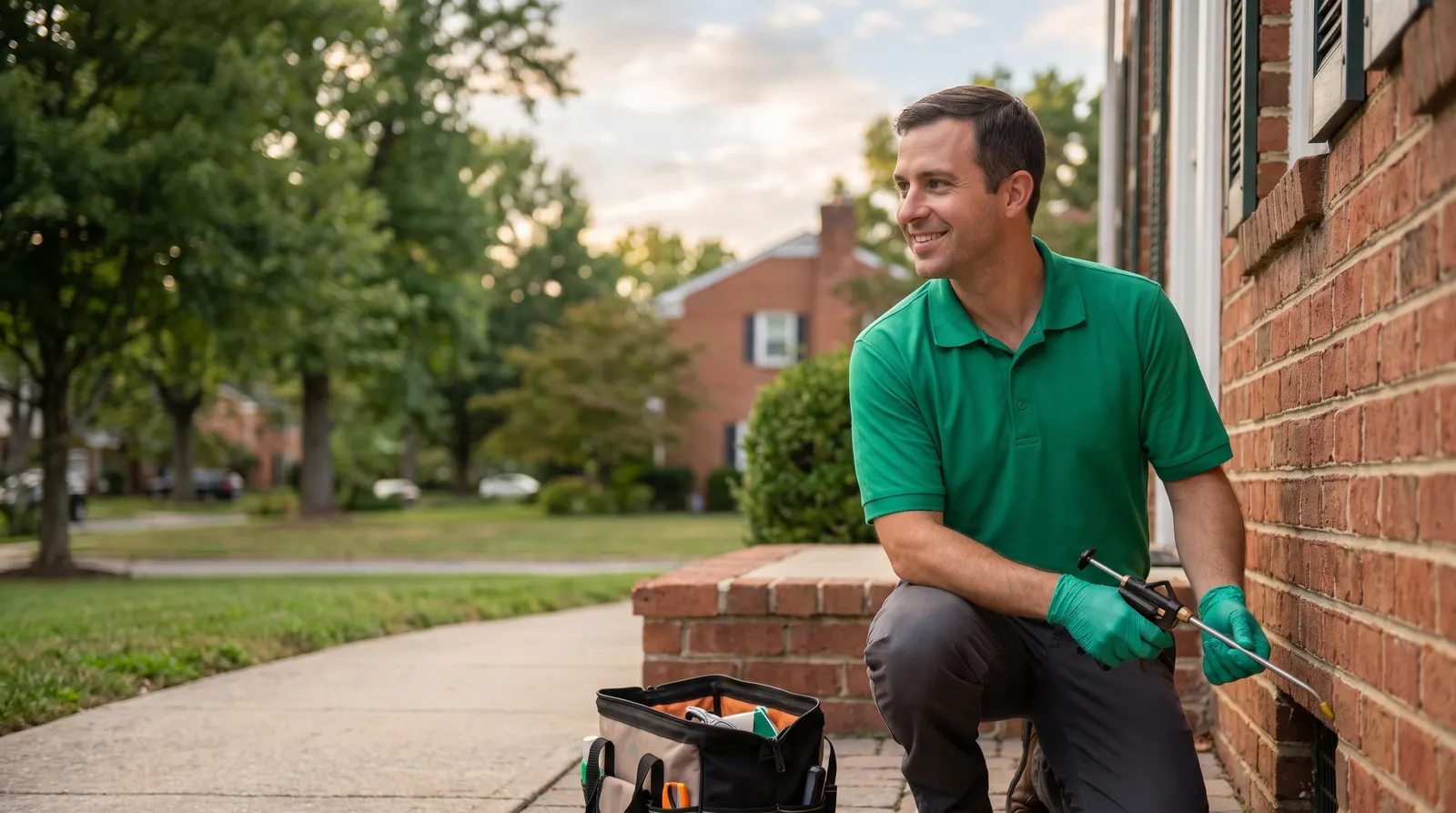
Pest Control Service in Baltimore is a targeted environmental remediation and structural exclusion process designed to eliminate wood-destroying insects, rodents, and urban pests from residential and commercial properties throughout Baltimore City.
Every service reflects the same meticulous attention to detail — whether it's a single job or a larger pest control service project across Baltimore.
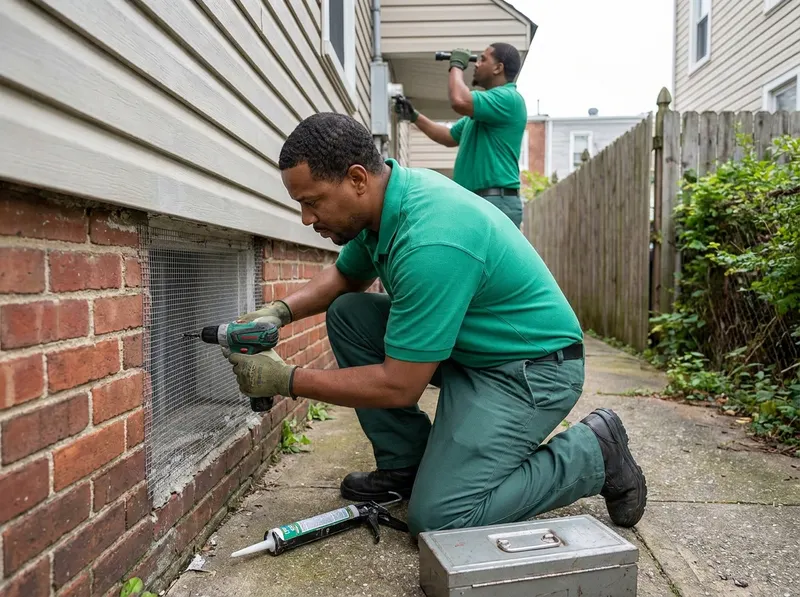
Heavy Norway rat (Rattus norvegicus) and house mouse (Mus musculus) intrusions demand comprehensive physical barrier defense rather than temporary retail bait boxes. Technicians execute meticulous property surveys across stone foundations, crawlspaces, party wall chases, and exterior mortar lines, sealing every structural opening exceeding one-quarter inch with heavy-gauge galvanized steel hardware cloth, stainless steel mesh, and non-shrink hydraulic cement. Once exterior entry points and shared inter-rowhouse pathways are blocked, technicians establish high-density mechanical capture arrays within basement sub-floors, crawl spaces, and ceiling voids to clear trapped populations quickly. The protocol finishes with thorough bio-sanitation, deodorization, and enzyme treatments of contaminated nesting sites to neutralize pheromone trails that attract future exterior colonies.
View details →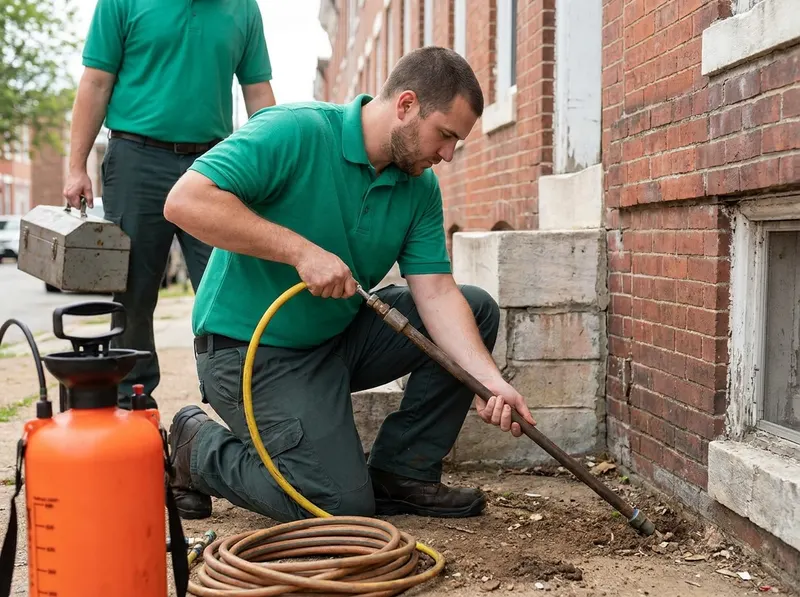
Eastern subterranean termites (Reticulitermes flavipes) cause severe structural degradation in load-bearing joists, wood lath, and mudsills throughout Baltimore's historic housing stock. We establish an impenetrable liquid perimeter barrier utilizing non-repellent liquid termiticides injected into continuous exterior foundation trenches and precision-drilled masonry slab footers. Foraging termites unknowingly track the active undetectable chemistries back to the central subterranean nest, transferring the active ingredient throughout the colony through social grooming and trophallaxis. Exterior low-profile cellular bait stations are installed in surrounding turf zones to provide round-the-clock biological monitoring and ongoing colony interception before subterranean workers contact vulnerable structural timbers.
View details →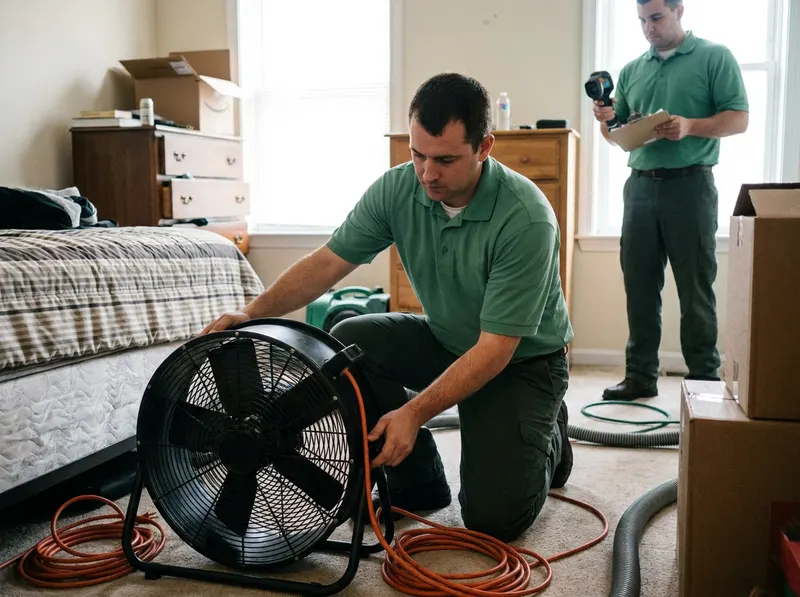
Bed bug thermal remediation utilizes industrial-grade convection heating systems to elevate indoor ambient temperatures to a lethal threshold between 125 and 135 degrees Fahrenheit. High-velocity axial air movers circulate dry heat evenly through structural wall cavities, mattress seams, baseboard channels, upholstered furniture, and hardwood floor gaps, penetrating areas where chemical sprays fail. This process eliminates adult bed bugs, nymphs, and unhatched eggs in a single targeted visit through irreversible cellular protein coagulation. Following thermal deactivation, technicians apply targeted microencapsulated desiccant dusts within perimeter electrical wall outlets and baseboard voids to create an invisible, long-lasting protective barrier against outside re-infestation.
View details →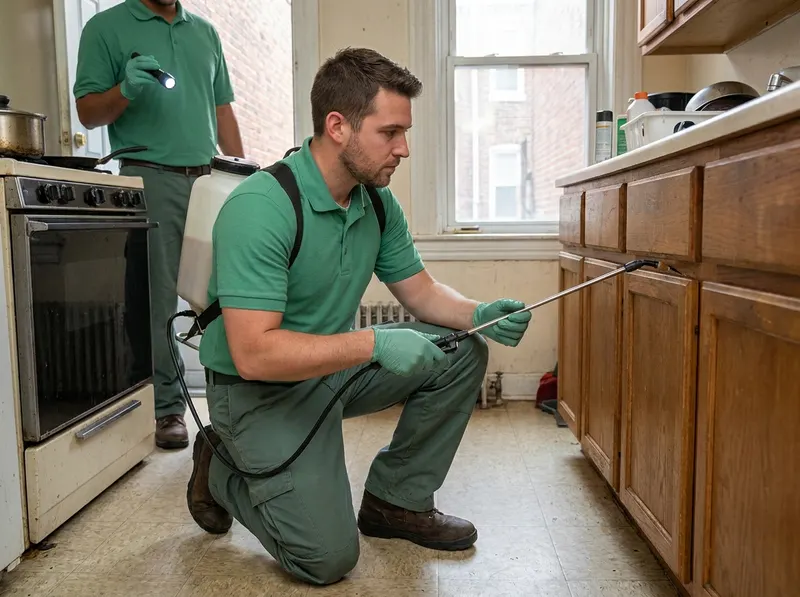
Urban multi-family residences, rowhouse kitchens, and interconnected plumbing networks often harbor resilient German cockroach (Blattella germanica) colonies that display high resistance to over-the-counter pyrethroid sprays. Our technical remediation strategy deploys targeted insect growth regulators (IGRs) that interrupt chitin synthesis and halt nymph maturation alongside high-palatability matrix baits applied directly into hidden harborage cracks. Non-repellent aerosol formulations are injected into dark void spaces beneath sinks, behind commercial-grade refrigeration compressors, and inside utility wall chases. This multi-tiered biological approach forces horizontal chemical transfer throughout the aggregation, wiping out reproductive adults and newly emerged instars without releasing airborne chemical odors.
View details →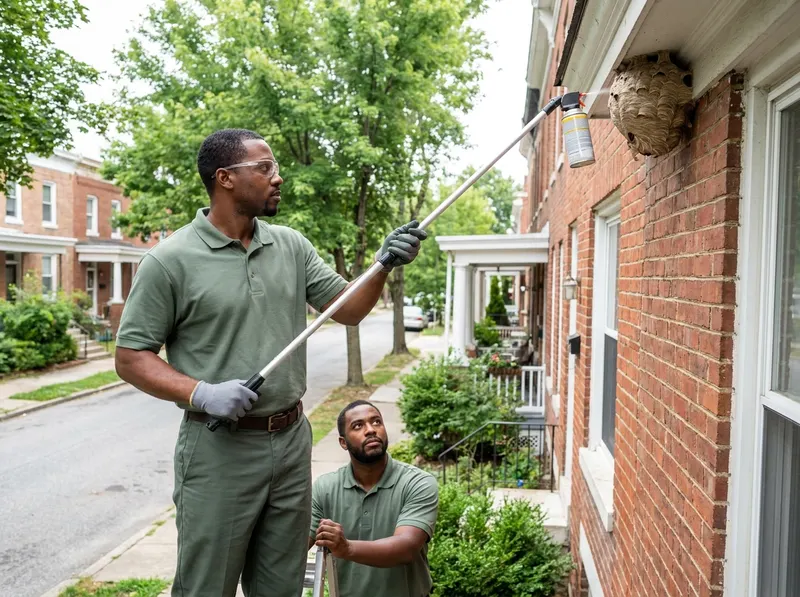
Bald-faced hornets, paper wasps, and aerial yellowjackets frequently build dangerous structural nests beneath historic roof cornices, wooden soffits, attic dormers, porch decks, and exterior masonry ledges across Baltimore neighborhoods. Technicians deploy pressurized telescopic delivery systems and specialized protective gear to inject localized knockdown actives directly into nest entry apertures, neutralizing defensive worker swarms within minutes. Following complete colony knockdown, technicians physically detach and extract the nest structure from the building surface, scraping away anchor residues and treating the exposed substrate with residual botanical deterrents to prevent fertile overwintered queens from rebuilding in identical spots.
View details →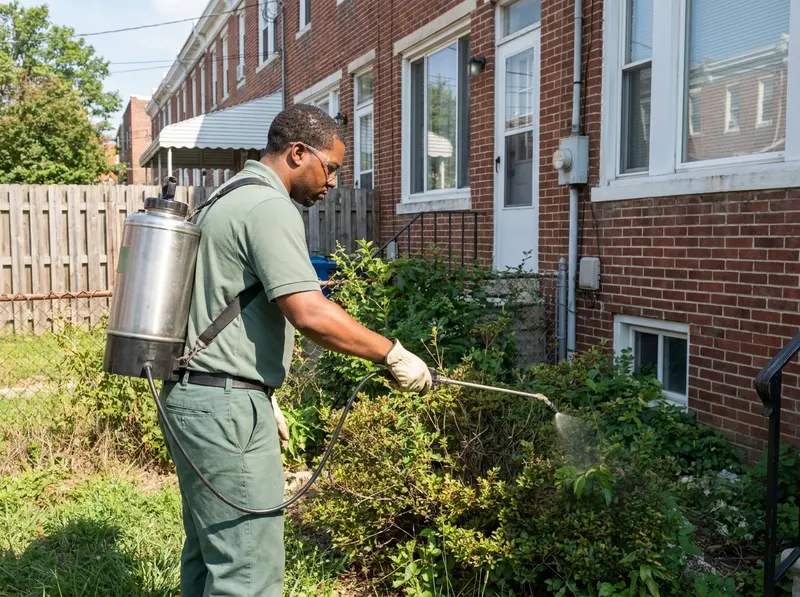
Severe domestic flea outbreaks and outdoor blacklegged tick vectors demand coordinated interior and exterior structural management to break complex reproductive lifecycles. Indoor treatments apply targeted adulticides paired with juvenile hormone mimics across carpet pile, subflooring, baseboard trim, and pet resting zones, preventing protected pupal cocoons from developing into biting adults. Exterior yard remediation focuses on shaded garden borders, leaf litter accumulation zones, low-hanging shrubbery, and property fence perimeters where wildlife hosts drop active parasites. This dual-zone treatment eliminates active outdoor host-seeking adults while establishing an environmental barrier that stops re-infestation across seasonal humidity spikes.
View details →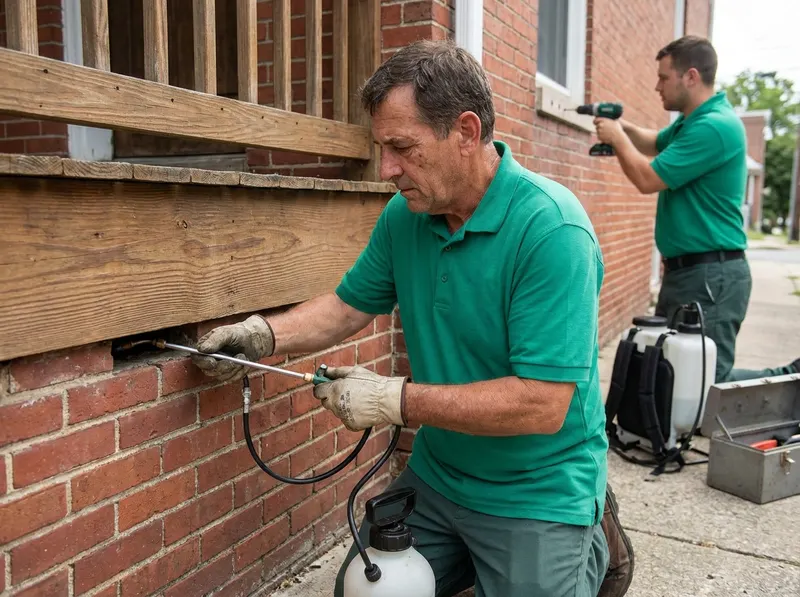
Black carpenter ants (Camponotus pennsylvanicus) excavate extensive smooth-walled galleries through moisture-damaged timber framing, roof valleys, window sills, and porch headers, weakening structural integrity over time. Technicians employ directional acoustic listening tools and thermal moisture imaging to locate parent colonies and concealed satellite nesting cavities inside building walls. Specialized expanding non-repellent insecticidal foam is injected directly into infested wall studs and ceiling joists, saturating the interior of the galleries and eradicating the nesting population. Exterior foundation perimeters and overhead tree-clearance zones are treated with long-lasting residual barrier defenses to sever exterior foraging trails.
View details →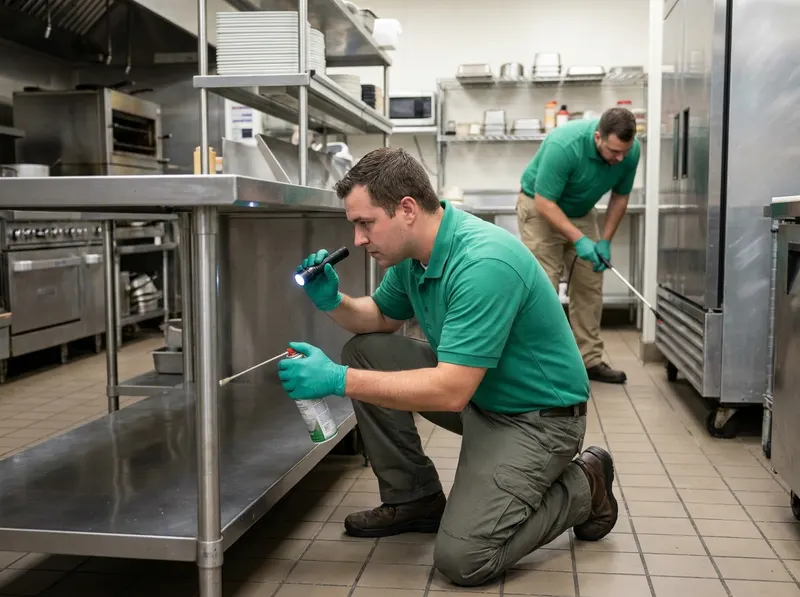
Commercial restaurants, food processing plants, bakeries, and multi-tenant rental properties in Baltimore require strict regulatory compliance, detailed digital reporting logs, and zero-tolerance structural pest management. Our commercial defense programs integrate tamper-resistant exterior bait monitoring matrices, organic enzymatic bio-foam applications to clear grease and drain fly larvae from floor drains, and discreet after-hours exclusion services. Technicians audit sanitation vectors, seal structural utility conduits, and maintain compliant integrated pest management (IPM) service records that meet or exceed Baltimore City Health Department and Maryland state regulatory requirements.
View details →Pest Control Service in Baltimore is a targeted environmental remediation and structural exclusion process designed to eliminate wood-destroying insects, rodents, and urban pests from residential and commercial properties throughout Baltimore City.
You get a firm, itemized quote for your pest control service before any work begins — no surprises, no pressure.
Careful prep, tidy work, and a full cleanup when we are done. We treat your home and belongings like our own.
The same trusted, background-checked team from the first call to the final check.
Selecting an effective pest remediation strategy depends entirely on structural age, target pest biology, and the physical architecture of your building. If you are managing an active Norway rat or house mouse intrusion inside an interconnected brick rowhouse in Canton, Fells Point, or Locust Point, choose comprehensive structural exclusion combined with targeted mechanical capture rather than standard exterior bait boxes; the trade-off is higher initial labor and diagnostic inspection time for permanent physical masonry sealing versus cheaper temporary bait replenishment that leaves structural gaps open to continuous migration from adjoining properties. If your property displays localized subterranean termite shelter tubes or reproductive swarmers near basement sill plates in Bolton Hill or Mount Vernon, select a continuous non-repellent liquid termiticide perimeter trench rather than isolated localized spot foaming; the trade-off is a more labor-intensive soil excavation and slab injection process around the foundation perimeter for guaranteed multi-year structural colony defense versus quick localized foaming that leaves undetected subterranean satellite colonies active beneath the slab. If you face an active bed bug infestation within living quarters or rental properties, opt for whole-room thermal convective remediation over multi-week contact chemical pesticide sprays; the trade-off involves thorough heat-sensitive prep work by the property occupant for single-day complete eradication across all life stages, including desiccation-resistant egg clusters, whereas surface sprays require repeated visits over four to six weeks and carry higher risks of pesticide tolerance. If you discover wood-boring carpenter ants nesting inside window headers or roof trusses in Roland Park or Charles Village, select targeted acoustic cavity micro-injection combined with exterior perimeter repellent barriers rather than general broadcast yard spraying; the trade-off is focused structural drilling into concealed satellite nests for complete colony elimination versus broad outdoor treatments that merely kill exterior foraging workers without neutralizing the egg-laying queen hidden inside damp load-bearing timbers.
Every project gets a firm, written price after a free on-site visit. Ranges below for orientation.
Tell us about your pest control service job and we'll send a clear, written quote — usually the same day. Or just call and talk to a real Baltimore pro.
(667) 309-5468
Baltimore's distinctive 19th-century brick rowhouse architecture—prominent across neighborhoods like Canton, Fells Point, Patterson Park, and Federal Hill—features interconnected party wall voids, shared stone rubble footers, and continuous timber joist pockets that allow Norway rats, mice, and German cockroaches to travel freely across entire city blocks. The city's proximity to the Patapsco River and the Chesapeake Bay watershed, coupled with low-elevation groundwater near the Inner Harbor, generates high atmospheric humidity and persistent soil moisture that accelerate subterranean termite pressure and wood rot fungi along vulnerable basement mudsills. Additionally, historic neighborhoods such as Mount Vernon, Bolton Hill, and Charles Village frequently possess aging stone foundations with weathered lime mortar joints, while northern enclaves like Roland Park and Hampden face heavy seasonal carpenter ant and stinging insect pressures from mature tree canopies and expansive parklands near Druid Hill Park. Standard surface pesticide sprays cannot resolve these complex structural challenges; successful remediation requires deep masonry repointing, heavy-gauge steel exclusion, precision void foaming, and non-repellent soil chemistry engineered specifically for Baltimore City's dense urban environment.
Free estimates for Baltimore & the surrounding area.
 Elvaron Pest Defense